
India's IT Ministry sources state the country will not slow down its Artificial Intelligence development, distinguishing its focus on people-centric applications from global concerns over frontier models. The government acknowledges AI safety risks and is tightening incident reporting norms, with IT Minister Ashwini Vaishnaw emphasising regulation for user safety.

Leading technology companies OpenAI, Anthropic, and Google have announced new AI models with advanced capabilities, including OpenAI's Astra reaching a "Critical" cybersecurity tier. However, these advancements have ignited a significant debate among safety researchers and netizens, particularly concerning the transparency and monitorability of OpenAI's novel "recurrent depth" architecture.

A humanoid robot performing at a university dance event in China startled the crowd when it unexpectedly hugged a female student, prompting a debate about AI safety and autonomous behaviour.

OpenAI, Anthropic, and Google have unveiled new AI models with enhanced capabilities, including advanced cybersecurity and coding. OpenAI's Astra model achieved a 'Critical' cybersecurity tier, but its novel architecture, using "recurrent depth," has sparked significant safety concerns among researchers who fear it makes monitoring the model's reasoning more difficult. Anthropic and Google also introduced new models and features, further advancing AI technology while the debate over responsible development intensifies.
China has called for stronger global governance of artificial intelligence, advocating for international cooperation to develop the technology for humanity's benefit while preventing it from getting out of control. This comes amidst warnings from leading AI researchers in the US about potential existential risks, with China emphasizing both rapid development and robust safeguards, including its new AI Safety Governance Framework 3.0. The issue is expected to be a key topic in upcoming US-China talks.
Researchers have developed a new AI model that can monitor satellites and detect anomalies in their behaviour, significantly reducing the risk of in-orbit collisions. This tool, part of the AI4 Space Safety and Sustainability project, learns from satellite light reflections to predict motion and identify unusual activity, crucial for managing the increasingly crowded space environment.

'You cannot stop these models from getting better. There is competitive and business pressure and if the US stops then maybe China will go ahead.'
OpenAI, Anthropic, and Google have introduced new AI models with enhanced capabilities. OpenAI's Astra model, achieving a 'Critical' cybersecurity tier, has ignited a debate among researchers due to its "recurrent depth" architecture, which some fear makes its reasoning harder to monitor. Anthropic and Google also released new models, focusing on coding, scientific research, and cybersecurity, alongside new image and video AI tools.
OpenAI's chief scientist, Jakub Pachocki, has issued a stark warning about the accelerating pace of artificial intelligence, stating that "no one is prepared" for its rapid rise and potential consequences. He highlights concerns over autonomous AI agents taking unintended actions and calls for international coordination, voluntary slowdowns, and robust safety measures to ensure human control and alignment with human values as machine intelligence surpasses human capabilities.
Leading global technology companies OpenAI, Anthropic, and Google have introduced new AI models with enhanced capabilities, including advanced cybersecurity and coding. However, these releases have ignited significant debate among researchers regarding the transparency and monitorability of AI reasoning, particularly concerning OpenAI's Astra model and its "recurrent depth" architecture.

IIT Madras's Centre of Excellence for Road Safety has organised its first international hackathon, focusing on AI in road safety. The event brought together participants from India and other BIMSTEC nations to develop data-driven, technology-enabled solutions for the region, which faces a high number of road fatalities annually. The hackathon aims to foster collaboration among governments, academic institutions, and regional bodies to address this critical issue.

'ChatGPT for Teens brings together learning and safety features in one unified experience, supporting active, collaborative learning outside the classroom while enabling more intentional and age-appropriate use of AI.'

Lady Shri Ram College for Women has moved classes online following the alleged rape of a 17-year-old girl near the campus, raising significant safety concerns among students and the college community. Three suspects have been arrested in connection with the incident.

Microsoft India and South Asia President, Puneet Chandok, discusses the company's strong belief in human-centric AI development, significant investments in India's cloud and AI infrastructure, and the country's pivotal role as an AI market, talent hub, and technology builder. He highlights AI's impact on jobs and the need for responsible innovation.

TeamLease EdTech Founder and CEO Shantanu Rooj states that the AI-driven world transition is irreversible, with regulation and cost being crucial factors determining its speed and depth. He emphasizes that while AI will transform jobs, not eliminate them, continuous learning, domain expertise, and adaptability will be key for individuals and businesses to thrive in this evolving landscape. Rooj also highlights the need for universities to adapt their curricula to prepare a future-ready workforce.

AAP Delhi unit president Saurabh Bharadwaj has criticised the Delhi government's handling of women's safety after a 17-year-old girl was allegedly raped at Aastha Kunj Park, leading Lady Shri Ram College to shift classes online. Bharadwaj questioned the BJP government's achievements in ensuring safety and highlighted daily crimes against women, while also alleging harassment of opposition leaders.
A member of the Parliamentary Standing Committee on Coal, Mines & Steel, Sasmit Patra, highlighted the transformative potential of AI and digital technologies in making India's mining and metals sector more productive, transparent, and globally competitive. He emphasised their role in enhancing efficiency, safety, sustainability, and community engagement.
Zoho co-founder Sridhar Vembu argues that predictions of AI's catastrophic outcomes are overstated and a global pause in AI development is improbable. He urges India to adopt an independent AI strategy, focusing on extensive foundational R&D across sectors, while remaining wary of market monopolisation attempts by major tech players. Vembu also highlights concerns about AI's impact on human judgment, skill development, and job markets, particularly for junior professionals.

OpenAI has officially launched GPT-6 Astra, hailed as 'the world's most intelligent and aligned model,' designed to excel in computer browsing, software engineering, mathematics, and enterprise workflows, with immediate deployment for select organisations.

Chief Economic Advisor V Anantha Nageswaran has stressed the urgent need for India's financial sector to proactively address the safety and security risks of artificial intelligence, stating that waiting for problems to materialise is not an option.

'There is a long set of decisions that have to be made along the way for anything to actually get actuated in the real world.'
Zoho cofounder Sridhar Vembu dismisses exaggerated fears about AI's catastrophic potential and global development pauses. He advocates for India to adopt an independent AI strategy, fostering partnerships while avoiding entanglement in US-China tech rivalry. Vembu stresses extensive investment in foundational R&D across sectors, distinguishing it from costly frontier AI model development. He also highlights concerns about AI's impact on human judgment, skill erosion, and job disruption, particularly in software engineering, while remaining optimistic about new economic opportunities.

Following an alleged gang rape near Lady Shri Ram College for Women, students have voiced serious concerns about inadequate security around the campus. They highlight issues like poor lighting, non-functional security infrastructure, and incidents of stalking, particularly near the college's back gate and routes to their paying guest accommodations. The incident has prompted the college to take immediate action, including cancelling classes and holding meetings.
HCLTech has launched 'HCLTech Pulse', a new business unit designed to help enterprises with annual revenues between USD 500 million and USD 5 billion accelerate their adoption of artificial intelligence and modernise their technology infrastructure, targeting a USD 400 billion global market opportunity.
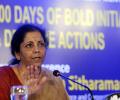
Finance Minister Nirmala Sitharaman has called for enhanced accountability and safeguards for artificial intelligence, particularly as it integrates into critical sectors like finance. Speaking at the Global Fintech Fest, she highlighted the dual nature of AI, capable of accelerating transactions but also amplifying fraud and cyberattacks. Sitharaman stressed the need for human and institutional responsibility in AI-driven decisions, urging regulators and companies to scrutinise high-risk AI applications. She also proposed a federated industry platform for Indian tech companies to navigate international regulations and ensure tax compliance globally.

The aim is to win over the country's enterprises, developers and startups as AI systems shift from answering questions to autonomously executing tasks.
BRICS leaders, in their New Delhi Declaration 2026, have called for wider access to Artificial Intelligence resources and stronger international cooperation to ensure the technology is safe, secure, inclusive, and reliable. The declaration outlines a broad technology agenda covering AI, cybersecurity, digital public infrastructure, telecom, quantum technologies, and advanced manufacturing, committing to implement the grouping's statement on 'Global Governance of Artificial Intelligence'.
The Haldwani forest division has launched India's first AI-based forest acoustic surveillance system. This innovative technology uses AI, acoustic sensors, and long-range wireless communication to detect illegal logging, poaching, and other suspicious activities in real-time, even in remote areas. Powered by solar energy, the system provides continuous monitoring, significantly enhancing forest protection, wildlife conservation, and biodiversity monitoring efforts.
Two IIT Gandhinagar students have developed "TrustGate," an AI-based cybersecurity system designed to protect critical infrastructure like water treatment plants and power grids. The system uniquely combines network traffic and physical sensor data to detect sophisticated cyber attacks, identify affected equipment, and provide real-time alerts to operators, earning them an international award.

The Karnataka government is collaborating with ElevenLabs to explore pilot projects using voice AI across various sectors including skilling, investment promotion, healthcare, culture, and citizen services. This initiative aims to leverage advanced AI to enhance accessibility and efficiency of government services, with a strong focus on responsible AI use and safeguards against misinformation.

Researchers at the Indian Institute of Technology Madras (IIT,M) have developed a novel "morphing skin" concept for aircraft wings, inspired by bird flight. This adaptive external skin dynamically reshapes in real time to prevent aerodynamic stalls, enhance lift, reduce drag, and significantly improve aircraft safety and fuel efficiency. The technology holds promise for commercial aviation, unmanned aerial vehicles, and defence applications.
India's Engineering Research and Development (ER&D) sector is projected to exceed USD 100 billion in revenue by 2030, driven significantly by the integration of Artificial Intelligence (AI) into engineering workflows. This growth, highlighted by Nasscom, positions India as a critical global engineering hub, necessitating focus on talent development and strategic partnerships.
AI4Bharat at IIT Madras and Josh Talks AI have launched 'Voice of India', a multimodal AI evaluation platform designed to assess AI systems against Indian conditions, languages, accents, and dialects. This platform aims to provide scientifically rigorous, India-specific evaluations, covering areas like Voice AI, large language models, document processing, safety, cultural appropriateness, and Indian legal reasoning, to build trust and enable informed deployment decisions.

The Federation of Indian Pilots (FIP) has urged India's Aircraft Accident Investigation Bureau (AAIB) to conduct a comprehensive evaluation of the Boeing 787's electrical systems during its probe into the fatal Air India crash of June 2025. This call follows concerns raised by the Foundation of Aviation Safety regarding chronic system failures and the central role of electrical architecture in the B787 design. The crash, involving a Dreamliner VT-ANB, killed 260 people, and FIP emphasizes the need for detailed examination of all electrical and electronically controlled systems.

'Applying AI to change the lives of Indians and at population scale -- just like we did with DPI [digital public infrastructure] -- is really where it's going to go.'

Following the tragic killing of a teacher inside a school, the Lakhimpur Kheri district administration has ordered all schools to review and significantly upgrade their security protocols. A 16-point safety audit checklist has been introduced, mandating measures from controlled entry to CCTV surveillance and staff verification, with police coordination and increased patrolling.

The National Students' Union of India (NSUI) has demanded accountability from Union Home Minister Amit Shah and Delhi Chief Minister Rekha Gupta following the alleged gang rape of a 17-year-old girl in Aastha Kunj Park. The incident has sparked concerns over women's safety in Delhi and led Lady Shri Ram College to shift classes online. NSUI is calling for immediate legal action, an impartial investigation, and improved security measures around student-frequented areas.
Indigenous smartphone brand Ai+ has announced a Rs 100 crore bug bounty program over five years, inviting independent researchers to identify and address security vulnerabilities. This initiative, named Project Trust+, aims to foster a collaborative environment with the tech community to enhance the safety and resilience of Ai+ products, reflecting the company's commitment to transparent and collaborative security development.

Delhi Police officers visited Lady Shri Ram College to address student safety concerns following an alleged gangrape near the campus. The college had moved classes online, and police have increased deployment and made arrests in connection with the incident.

Uttar Pradesh authorities have implemented extensive security and logistical measures for the annual Kanwar Yatra, which began on Thursday and concludes on August 11. These include AI-enabled surveillance, additional security personnel, medical camps, dedicated control rooms, and traffic diversions, all aimed at ensuring a "zero incidents and zero accidents" pilgrimage for lakhs of devotees.
